Signs and markings · about 5 min read
Pedestrian, cycle, noise and lift bans
Signs that keep particular road users or behaviour out
What you will learn
- Recognise bans on pedestrians and cyclists.
- Apply the 100 m horn restriction.
- Understand the 500 m hitch-hiking ban for drivers.
Pedestrian, cycle, noise and lift bans: how to read them
These red-bordered signs exclude people or behaviour. R218 keeps pedestrians off a road. R219 keeps cyclists off. As a driver, you must still watch for anyone who ignores the sign, because a prohibition on them does not make a collision acceptable.
R206 is about noise near hospitals, churches and homes for the elderly. R207 bans hitch-hiking and prevents drivers picking up passengers for the next 500 metres.
Think about the person who ignores the sign. A cyclist on a road where cycles are banned, or a pedestrian on a road closed to people, may be there because the alternative looks longer or less convenient. Your duty to avoid a collision does not end because someone else is in the wrong place, so slow down and give anyone you find more room than usual.
Key idea: Bans exclude users or actions. Watch for those who ignore them.
No pedestrians — R218
Pedestrians may not use this road.
Recognise it. A red-bordered white disc with a pedestrian symbol crossed out.
Where you meet it. At the start of a carriageway, lane or path that people must not use.
What to do. Pedestrians may not enter or cross. As a driver, still watch for anyone who enters despite the sign.
Why it exists. A road may be too fast or narrow for people on foot. The ban protects pedestrians from vehicles and drivers from sudden obstacles.
In practice. A road forbids pedestrians. You still scan the shoulder for people who walk there, because a ban does not guarantee an empty edge.
Easily confused. The opposite of R110, which sets the route aside for pedestrians.
Key idea: Use a permitted pedestrian route.
No cyclists — R219
Pedal cycles are prohibited on this road.
Recognise it. A red-bordered white disc with a bicycle symbol crossed out.
Where you meet it. At the start of a carriageway, lane or path that cyclists must not use.
What to do. Cyclists must use another route. Keep looking for riders who ignore the sign.
Why it exists. Some roads are too fast or busy for cyclists. The ban keeps them off roads where a collision would be especially dangerous.
In practice. A tunnel is closed to cyclists. You keep a bigger gap when passing a rider who has ignored the sign, and you slow until you are past.
Easily confused. Not the same as R111, which sets a route aside for cyclists only.
Key idea: Use another route when cycling.
No hooting — R206
Sounding the horn is prohibited for the next 100 metres.
Recognise it. A red-bordered disc with a horn crossed out.
Where you meet it. Roads near hospitals, churches and homes for the elderly.
What to do. Avoid excessive noise and do not use your horn for the next 100 metres. If your vehicle is very loud you may not pass the sign. An emergency warning to avoid a collision is a different case.
In practice. Outside a hospital you see the horn ban. You switch off any habit of tooting at friends and keep your engine noise low.
Easily confused. The 100 m noise zone is a different distance from the 500 m used for overtaking and hitch-hiking signs.
Key idea: Avoid unnecessary noise. Always act to prevent an immediate collision.
No hitch-hiking — R207
Hitch-hiking is prohibited on this road section.
Recognise it. A red-bordered disc showing a hand signalling for a lift, crossed out.
Where you meet it. On any public road where hitch-hiking creates a hazard.
What to do. No pedestrian may try to get a lift, and a driver may not pick up passengers for the next 500 metres.
In practice. A driver ahead slows to collect a hitch-hiker where the ban applies. You keep going, because stopping to pick someone up there is not allowed.
Easily confused. The ban covers drivers as well as hitch-hikers. A short pause to collect someone would still be a breach.
Key idea: Do not seek a lift by hitch-hiking here.
Distances to remember
The noise restriction runs for 100 metres after the sign. The hitch-hiking and overtaking bans run for 500 metres. Do not mix them up.
The horn ban concerns unnecessary noise. You may still act to prevent an immediate collision.
When a sign bans something, ask whether it bans a road user, an action or a sound.
Key idea: Bans exclude users or actions. Watch for those who ignore them.
A hitch-hiker at a ban sign
You see R207 and someone signalling for a lift.
- Do not stop for them within the ban distance.
- Continue to a place where you can stop legally.
- Keep your speed safe near the person.
- Do not sound your horn as a warning unless needed to avoid danger.
Quick recap
- R218 and R219 exclude pedestrians and cyclists.
- R206 means a 100 m horn ban.
- R207 bans hitch-hiking and pickups for 500 m.
- Keep watching for those who ignore bans.
Practice questions on pedestrian, cycle, noise and lift bans
1 What does this sign mean?
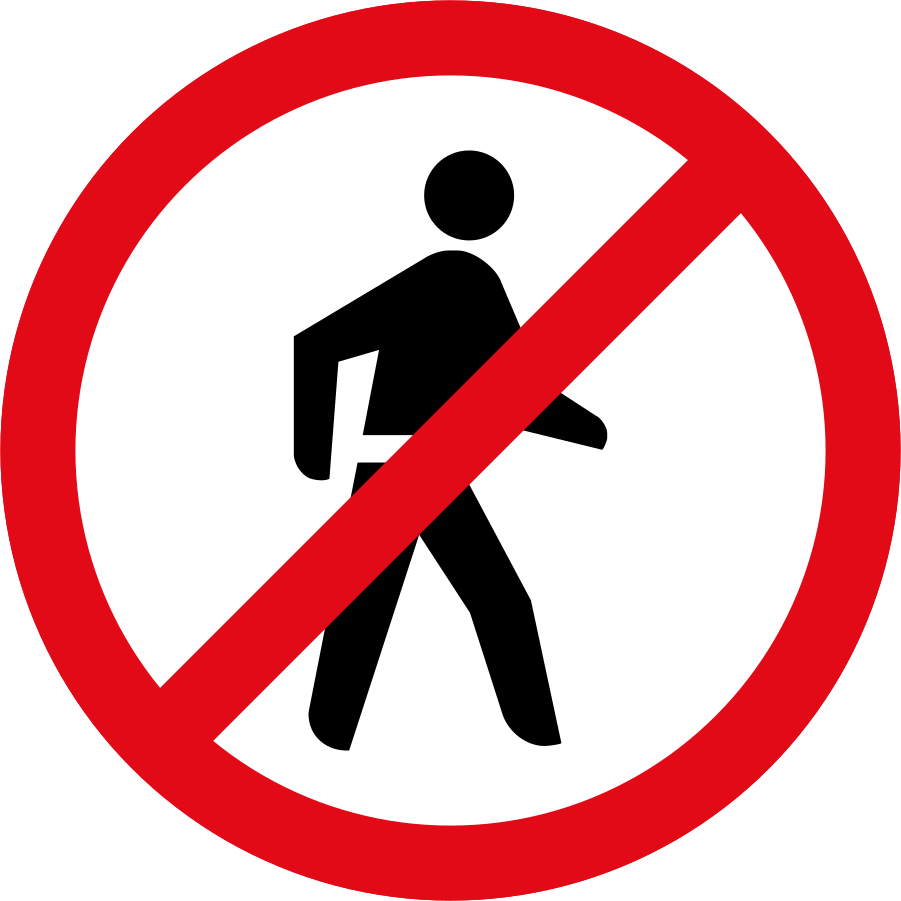
- Pedestrians may not use this road.
- A gate lies across the road ahead.
- A stop sign is ahead.
Show the answer
Answer A: Pedestrians may not use this road.
Use a permitted pedestrian route.
Memory tip: R218 · No pedestrians
All vehicle codes
2 Which response fits this sign?
- Use a permitted pedestrian route.
- Start slowing down. The actual stop is at the stop line ahead.
- Reduce speed and be ready to stop at the gate.
Show the answer
Answer A: Use a permitted pedestrian route.
No pedestrians: Pedestrians may not use this road.
Memory tip: Use a permitted pedestrian route.
All vehicle codes
3 Which sign group does this example belong to?
- Warning
- Prohibition
- Command
Show the answer
Answer B: Prohibition
No pedestrians is a prohibition sign. Pedestrians may not use this road.
Memory tip: Use a permitted pedestrian route.
All vehicle codes
4 What does this sign mean?
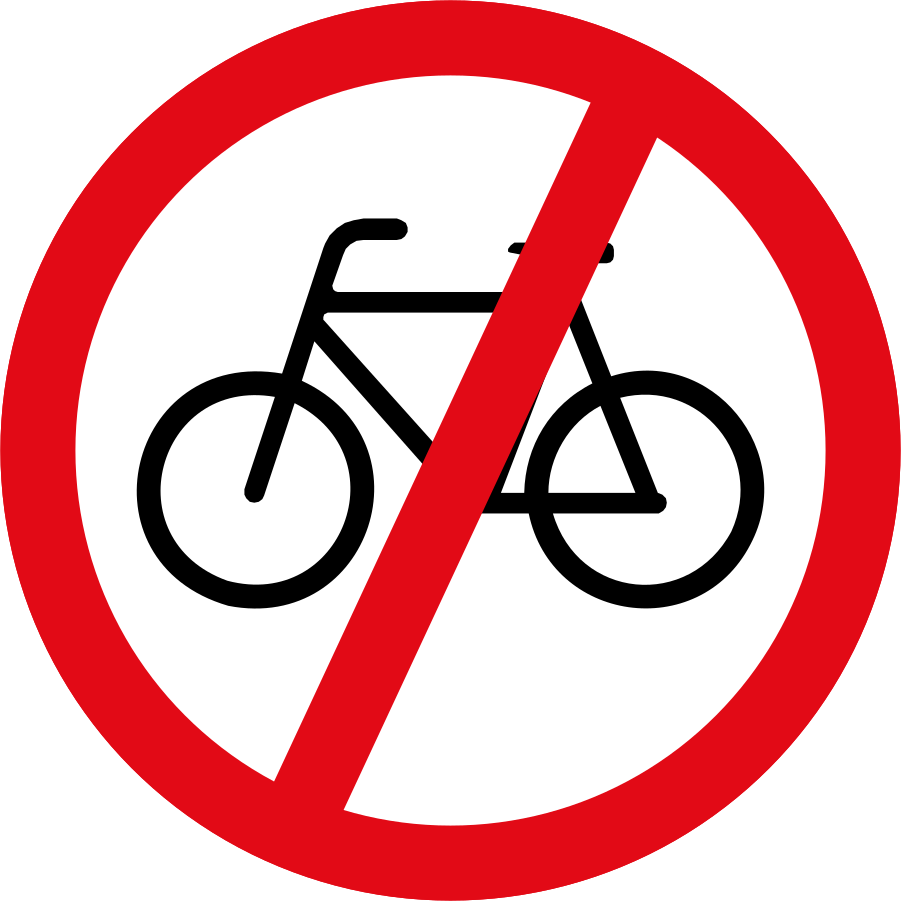
- A tunnel lies ahead.
- A yield sign is ahead.
- Pedal cycles are prohibited on this road.
Show the answer
Answer C: Pedal cycles are prohibited on this road.
Use another route when cycling.
Memory tip: R219 · No cyclists
All vehicle codes
More signs and markings chapters
- Turn and U-turn prohibitions
- Overtaking, parking and stopping bans
- Vehicle size and mass limits
- Reserved lanes and freeways
- Junction warning signs
- Curve warnings
Sources: NaTIS Road Traffic Signs, June 2012, PDF pp. 12, 14 (names, locations, purposes and actions); iDriving K53 manual, PDF pp. 6–42 (visual comparison; text extraction incomplete); SADC artwork: assets/signs/manifest.json (per-file sources and licences).
AceK53 is an independent study aid based on public road traffic manuals and is not an official test. Always confirm requirements with your driving licence testing centre.