Signs and markings · about 5 min read
No entry and one-way roads
Where you may not enter, and which way one-way traffic flows
What you will learn
- Avoid entering a road from the wrong end.
- Read a one-way arrow and its side.
- Combine entry prohibition and direction signs correctly.
No entry and one-way roads: how to read them
One-way systems depend on two kinds of signs working together. The no-entry sign stops you at the wrong end. The one-way arrow tells you the direction you may travel, and which side the one-way carriageway lies on at a junction.
The usual mistake is on unfamiliar roads, especially near ramps and one-way streets at night. The safe habit is to read before you turn: is there a white bar on a red disc facing me? Does an arrow match the direction I intend to drive?
A useful habit on unfamiliar roads is to check the far end of a street before you turn into it. If a one-way sign points the way you are about to go, you are entering at the correct end. If you see a plain red disc with a bar facing you, you are at the wrong one.
Key idea: Red disc with a white bar: do not enter. One-way arrow: go with it only.
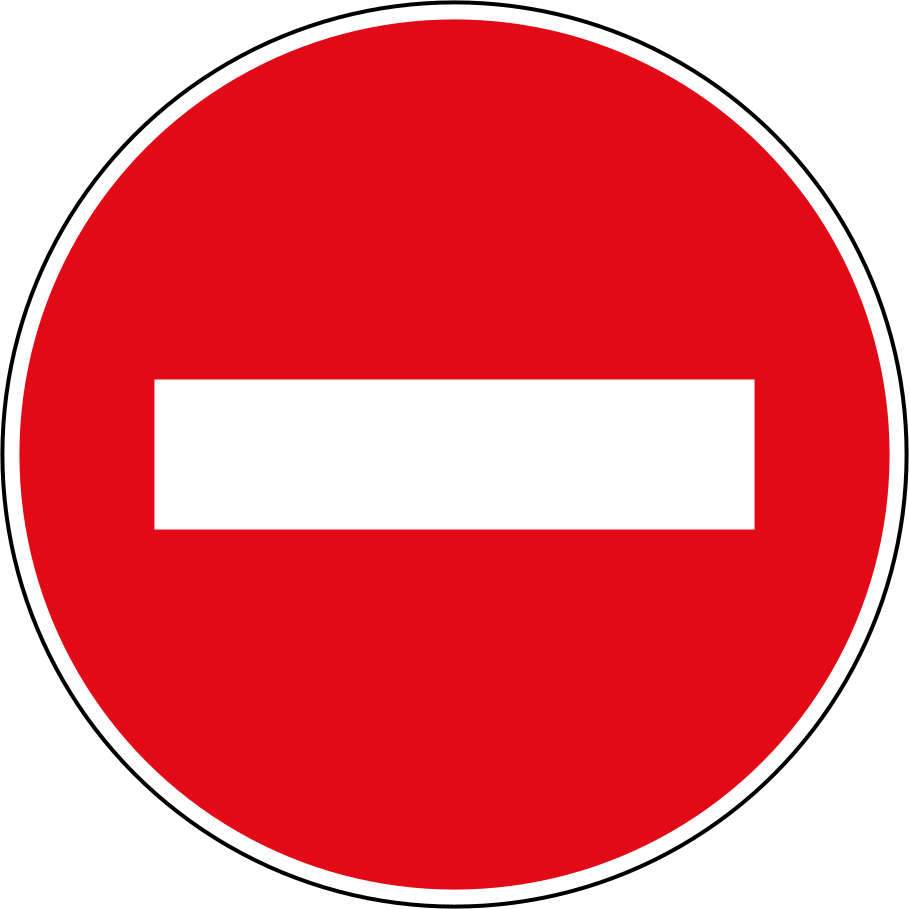
No entry — R3
Vehicles may not enter from this direction.
Recognise it. A red disc with a single white horizontal bar across the middle.
Where you meet it. The far end of a one-way street, the exit end of an off-ramp, and junctions where a two-way road becomes one-way.
What to do. Do not enter the road, carriageway or lane beyond the sign, even if it looks empty. Choose another route and check that you have not turned into the wrong end of a ramp.
In practice. Looking for a car park, you turn into what appears to be an empty lane. A red disc with a white bar faces you. You stop, reverse only if it is safe to do so, and go to the entrance that is open to traffic.
Easily confused. No entry stops you entering. A one-way arrow tells you which way traffic may go. Confusing the two is how drivers end up facing oncoming traffic.
Key idea: Find a permitted route. This sign applies even when the road appears empty.
One-way direction — R4.1
Traffic may travel only in the direction shown by the arrow.
Recognise it. A one-way arrow sign. In the manual’s order, R4.1 points to a one-way carriageway on the left.
Where you meet it. Where a one-way road meets another road, at the junction itself, so you know which side the one-way lane lies on.
What to do. Use that carriageway only if your route needs it, and drive in the direction of the arrow. Check the junction as normal before you turn.
In practice. You turn left onto a one-way street at a junction. The arrow shows the carriageway on your left, so you enter it in the permitted direction and check for cyclists on the inside.
Easily confused. R4.1, R4.2 and R4.3 are the same instruction in three directions. Read the arrow itself rather than relying on the number.
Key idea: Use this roadway only in the indicated direction.
One-way roadway — R4.2
Traffic travels in the direction shown by the arrow.
Recognise it. A one-way arrow sign. In the manual’s order, R4.2 points to a one-way carriageway on the right.
Where you meet it. Junctions where a one-way road joins another road on your right.
What to do. Turn in only if you want that carriageway, in the arrow’s direction, once the junction is clear. Do not drive the other way along it.
In practice. You approach a junction where a one-way road lies on your right. You take it only because your route needs it, with the arrow, after checking the crossing and any oncoming traffic.
Easily confused. Compare with R3, which forbids entry from the wrong end. Together they tell you both how to join the street and where you may not.
Key idea: Travel only in the indicated direction.
One-way direction — R4.3
Traffic may travel only in the direction shown by the arrow.
Recognise it. A one-way arrow sign. In the manual’s order, R4.3 points to a one-way carriageway straight ahead.
Where you meet it. At junctions where the road beyond the intersection is one-way for traffic going the same way as you.
What to do. Continue ahead only in the direction shown. Expect traffic in the lane or lanes to flow the same way, and watch for people crossing.
In practice. A one-way road runs straight ahead. You carry on in its direction, keep to a lane that suits your next turn and expect parked cars on both sides.
Easily confused. Straight-ahead one-way is different from a compulsory “proceed straight only” command (R107), which restricts what you may do at the junction.
Key idea: Read the arrow before entering the roadway.
Prohibition and direction
No entry (R3) says you may not enter. The one-way signs (R4.1 to R4.3) say which way traffic flows, and in the manual’s order R4.1 is a one-way carriageway to the left, R4.2 to the right and R4.3 straight ahead.
If you see no-entry, do not enter, however empty the road looks. If you see a one-way arrow, enter only if your route needs it and only with the arrow.
Key idea: Red disc with a white bar: do not enter. One-way arrow: go with it only.
Turning into the wrong end of a ramp
At night, you leave a service road and see a red disc with a white bar ahead of the ramp.
- Stop before turning in and recognise the no-entry sign.
- Do not enter the ramp, even if you see no vehicle coming.
- Choose another route and use the proper entry.
- If you realise too late, stop safely and do not reverse onto the ramp.
Quick recap
- No entry means you may not enter.
- One-way arrows give the direction of flow.
- Read the arrow, not just the number.
- Never rely on an empty road.
Practice questions on no entry and one-way roads
1 What does this sign mean?
- You must turn left at the junction ahead.
- Vehicles may not enter from this direction.
- You may not turn around to face the opposite direction here.
Show the answer
Answer B: Vehicles may not enter from this direction.
Find a permitted route. This sign applies even when the road appears empty.
Memory tip: R3 · No entry
All vehicle codes
2 Which response fits this sign?
- Continue to a place where turning around is permitted and safe.
- Position correctly and signal in good time.
- Find a permitted route. This sign applies even when the road appears empty.
Show the answer
Answer C: Find a permitted route. This sign applies even when the road appears empty.
No entry: Vehicles may not enter from this direction.
Memory tip: Find a permitted route. This sign applies even when the road appears empty.
All vehicle codes
3 Which sign group does this example belong to?
- Warning
- Command
- Control
Show the answer
Answer C: Control
No entry is a control sign. Vehicles may not enter from this direction.
Memory tip: Find a permitted route. This sign applies even when the road appears empty.
All vehicle codes
4 What does this sign mean?
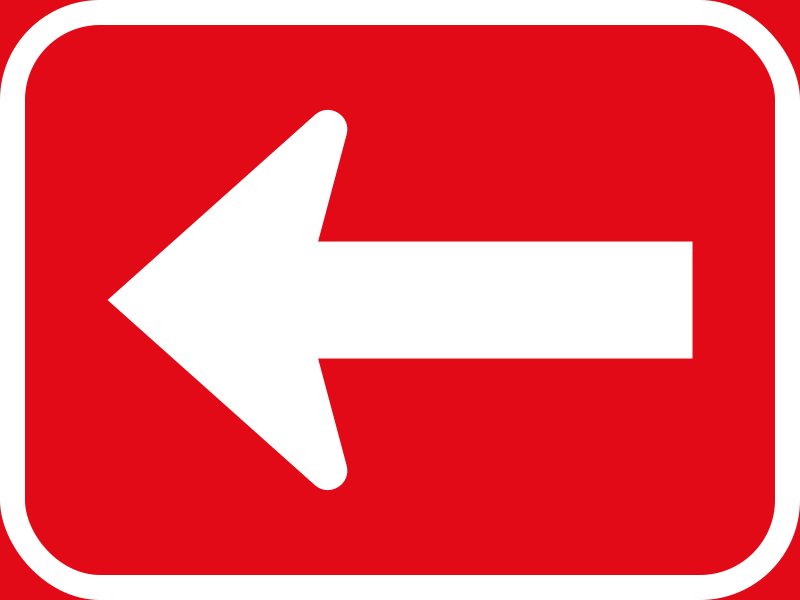
- Traffic may travel only in the direction shown by the arrow.
- A right turn is prohibited at the junction ahead.
- Yield at the controlled traffic circle or mini circle.
Show the answer
Answer A: Traffic may travel only in the direction shown by the arrow.
Use this roadway only in the indicated direction.
Memory tip: R4.1 · One-way direction
All vehicle codes
More signs and markings chapters
- Guidance, information and supplementary signs
- Stop controls
- Yield and priority signs
- Direction commands and roundabouts
- Who may use the road
- Speed signs
Sources: NaTIS Road Traffic Signs, June 2012, PDF p. 6 (names, locations, purposes and actions); iDriving K53 manual, PDF pp. 6–42 (visual comparison; text extraction incomplete); SADC artwork: assets/signs/manifest.json (per-file sources and licences).
AceK53 is an independent study aid based on public road traffic manuals and is not an official test. Always confirm requirements with your driving licence testing centre.