Signs and markings · about 4 min read
Warning signs and temporary road controls
Recognise the hazard and prepare before reaching it
What you will learn
- Distinguish advance warning from a control at the hazard.
- Recognise pedestrian, junction, railway and surface warnings.
- Adapt to temporary works and directions.
Why warnings are placed before hazards
Most ordinary warning signs are upright triangles with a red border and a dark symbol on a light background. They warn you early about a dangerous condition on or beside the road. The symbol identifies what needs attention; the sign does not normally prescribe a particular numerical speed.
As soon as you identify the warning, look ahead for the hazard and adjust speed so you can respond or stop. A supplementary plate may state a distance, length of affected road or other condition. Read it with the main sign.
A warning of a stop sign tells you to prepare; the required stop is at the actual stopping point. A warning of lights is not a substitute for reading the lights themselves.
Key idea: Use the warning to prepare before you arrive.
Pedestrian crossings, pedestrians and children
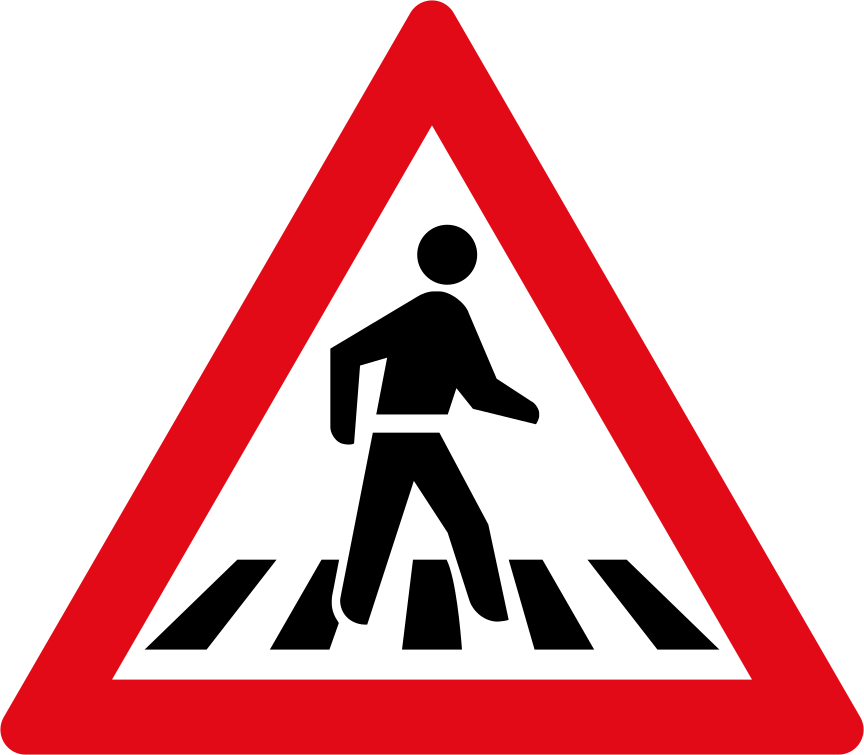
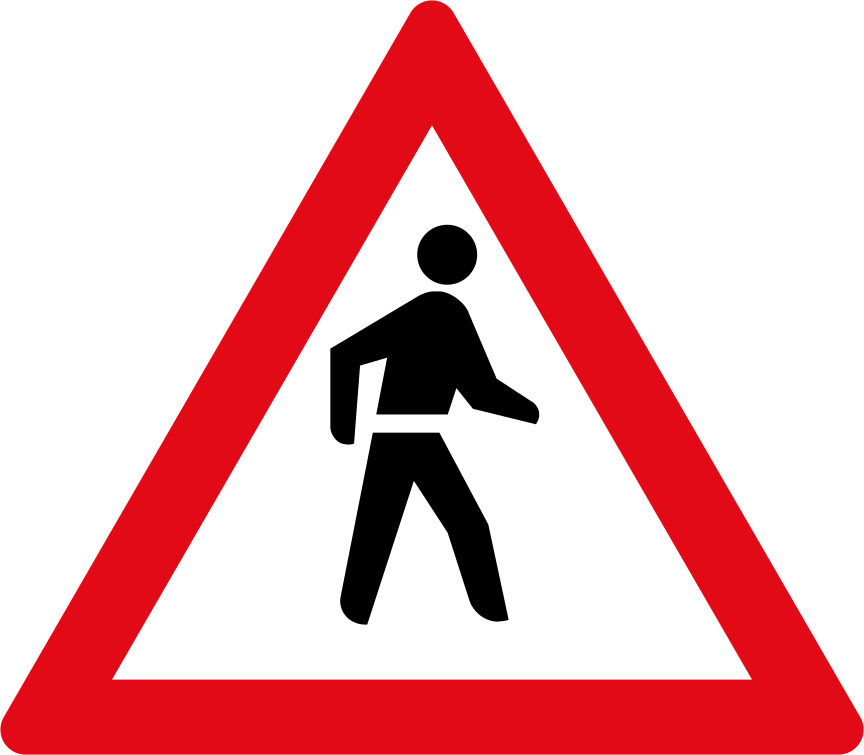
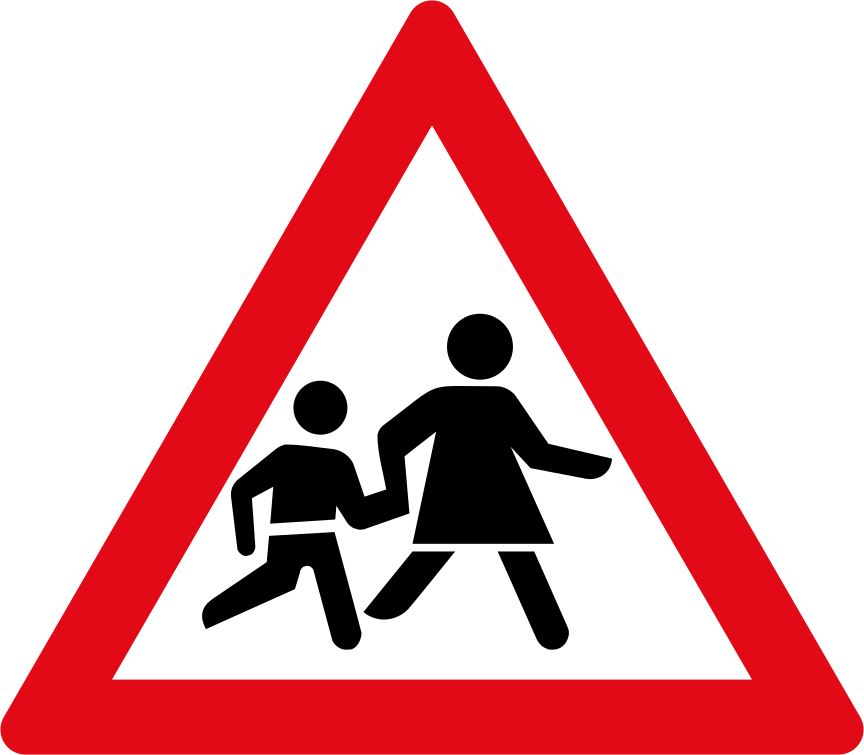
The pedestrian-crossing warning identifies a crossing ahead. A pedestrians-ahead warning tells you that people may be on or near the road. A children warning is commonly associated with places where children may enter unexpectedly, such as school areas. These symbols call for different observations even though all involve people.
Reduce speed before the hazard and scan both sides. Children may be difficult to see behind parked vehicles and may not judge your speed correctly. Be ready to stop, leave adequate space and do not use the horn to demand that people hurry.
At the crossing, obey any pedestrian-priority sign and signals. Do not pass a vehicle stopped to yield to pedestrians, and keep the crossing clear when traffic queues.
Key idea: Warnings prepare you; crossing controls determine the action at the crossing.
Road layout and road-surface warnings
A crossroad warning identifies a road meeting yours ahead; a T-junction warning means your road ends at a joining road and you will need a permitted turn. A curve warning depicts a change in direction. Slow down before the bend and maintain a speed that lets you stop within the visible clear road.
A two-way-traffic warning means opposing vehicles will use the road ahead, for example where a one-way section ends. Keep correctly left and do not assume the whole width remains for your stream.
The slippery-road sign warns that grip may be reduced. Ease speed and use smooth steering and braking. A warning alone does not identify the exact grip available; rain, debris or spilled material can make the risk greater.
Key idea: Identify whether the hazard is layout, traffic direction or surface grip.
Railway-crossing warning
The railway warning is placed before a crossing to prepare you to look for its controls and for trains. A train cannot swerve away from a vehicle on the rails and may need a long distance to stop.
Slow on approach and read the stop sign, lights, barrier and other controls at the crossing. Look and listen where appropriate, and do not enter unless the whole vehicle can clear the railway without stopping on it. A queue beyond the crossing is a reason to wait before entering.
Flashing red railway lights mean remain stopped until the warning ends and the crossing is safe. This differs from a junction’s flashing red stop-then-proceed signal. Keep checking for a second train.
Key idea: Do not enter the rails unless controls permit it and your exit is clear.
Temporary signs and roadworks
Temporary signs use a yellow background for the affected circumstances. Roadworks can change the lane arrangement, speed restriction and priorities for minutes or for months. A familiar route may no longer have its familiar safe path.
Read temporary signs early, reduce speed as required and watch for workers, equipment and uneven surfaces. Follow the current lane guidance and authorised directions. A manually operated STOP/GO board requires stopping when STOP faces you and cautious movement when GO permits it and the route is safe.
Do not drive through barriers or treat a temporary restriction as less important than a permanent sign. Prepare for queues and keep enough space to stop without hitting the vehicle ahead.
Key idea: Temporary controls are real controls for the changed road situation.
Children warning beside parked cars
A children warning appears before a school area where parked cars obstruct the sidewalk view.
- Reduce speed before reaching the school frontage.
- Scan gaps between parked vehicles and prepare to stop.
- Leave room and yield at any controlled crossing; do not pass a vehicle stopped for pedestrians.
Quick recap
- Warning triangles announce hazards, not automatic priority.
- Read the symbol and any supplementary plate.
- Railway flashing red requires waiting.
- Follow temporary works controls.
Practice questions on warning signs and temporary road controls
1 What does this sign mean?
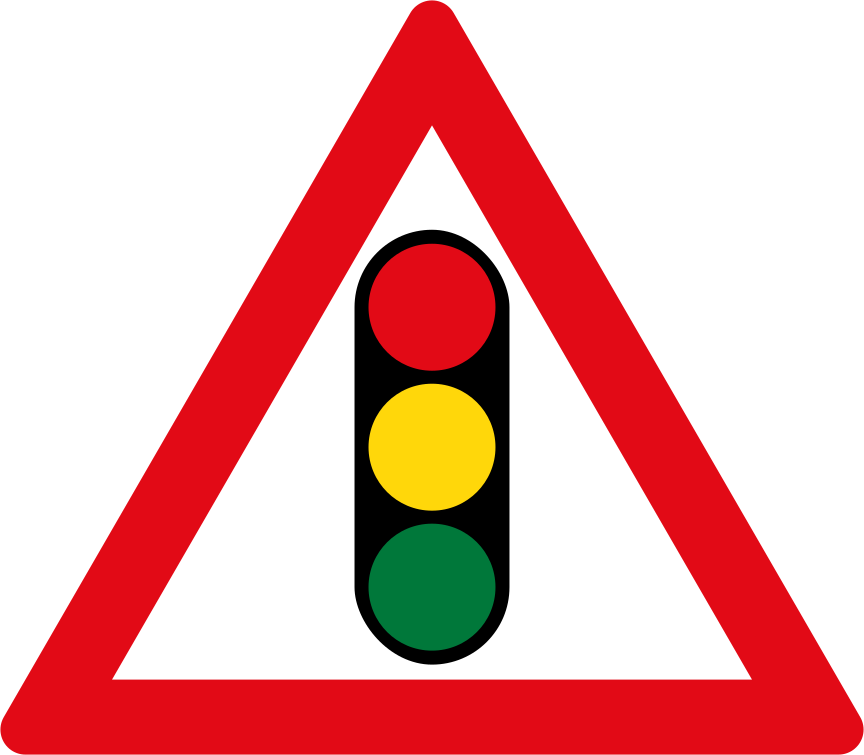
- Road construction or maintenance is ahead.
- The passage ahead is only wide enough for one vehicle.
- A traffic-light-controlled junction is ahead.
Show the answer
Answer C: A traffic-light-controlled junction is ahead.
Prepare to stop if the signal requires it.
Memory tip: W301 · Traffic signals ahead
All vehicle codes
2 What does this sign mean?
- Horses may be on or near the road ahead.
- A pedestrian crossing is ahead.
- The road narrows from the left ahead.
Show the answer
Answer B: A pedestrian crossing is ahead.
Look for people waiting to cross or already crossing.
Memory tip: W306 · Pedestrian crossing
All vehicle codes
3 What does this sign mean?
- The road surface is uneven ahead.
- Sheep may be on or crossing the road ahead.
- Pedestrians may be on or near the road ahead.
Show the answer
Answer C: Pedestrians may be on or near the road ahead.
Slow down and leave enough space.
Memory tip: W307 · Pedestrians ahead
All vehicle codes
4 What does this sign mean?
- Wild animals may enter the road ahead.
- A speed hump lies ahead.
- Children may enter the road unexpectedly.
Show the answer
Answer C: Children may enter the road unexpectedly.
Reduce speed and be ready to stop.
Memory tip: W308 · Children ahead
All vehicle codes
More signs and markings chapters
- Stop and yield signs
- Speed signs and mandatory directions
- Prohibition signs and restricted movements
- Signals, reservations and freeways
- Traffic lights and signal-controlled crossings
- Failed and flashing traffic signals
Sources: NaTIS Road Traffic Signs, PDF pp. 3–4, 24–38; iDriving K53 manual, PDF pp. 27–42.
AceK53 is an independent study aid based on public road traffic manuals and is not an official test. Always confirm requirements with your driving licence testing centre.