K53 topic guide · 4 chapters
K53 traffic circle (roundabout) rules
How to enter, move around and leave a traffic circle, and which sign applies.
South Africans say traffic circle or roundabout, and the test uses both ideas. These chapters cover the rule for entering a circle, the signs you meet at one and how a traffic circle fits into right of way at junctions.
Intersections, traffic circles and right of way
An intersection is the place where two or more public roads join or cross. Your path may meet vehicles from the sides, opposing vehicles turning across you, and pedestrians crossing the road. The surfaced conflict area is often called the junction.
- Know the layout, the controlling instruction and the space available beyond it.
- Every vehicle stops, then uses the observed arrival order and a fresh safety check.
- Circulate clockwise and obey the entry control; circulating traffic may have priority.
Read the full chapter: Intersections, traffic circles and right of way →
Direction commands and roundabouts
Blue circles are command signs: they require an action rather than forbid one. Here the action is about direction. Some tell you to pass an obstruction on a given side, some restrict which way you may go at the junction you are at, and some prepare you for a required turn ahead.
- Read the arrow shape, then decide whether it is about passing, going or turning ahead.
- Follow the arrow around the island. This is not a left-turn instruction.
- Follow the arrow while observing other traffic.
Yield and priority signs
Yield signs settle priority without always bringing traffic to a halt. They ask you to arrange your approach so that another road user with priority is never forced to brake or swerve because you arrived.
- Priority belongs to someone else. Your job is to leave them undisturbed.
- Slow down early. Stop if needed to let traffic or pedestrians pass.
- Slow down and give pedestrians time to cross safely.
Keeping left, lane changes and overtaking
A divided road has separate roadways for opposing traffic, often separated by a median or barrier. A traffic lane is a longitudinal space for one line of vehicles. The shoulder lies beside the roadway and is not simply an extra traffic lane.
- A divided road has separate roadways for opposing traffic, often separated by a median or barrier.
- Keep safely left without entering an unsafe area.
- Apply the full rule to the actual vehicle, road and conditions.
Read the full chapter: Keeping left, lane changes and overtaking →
Practice questions on traffic circles
1 A traffic officer tells you to stop, but the light is green. What do you do?
- Sound the horn and continue
- Stop as directed by the officer
- Continue because the light is green
Show the answer
Answer B: Stop as directed by the officer
An authorised traffic officer’s directions take priority over traffic lights and signs.
Memory tip: An authorised traffic officer’s directions take priority over traffic lights and signs.
All vehicle codes
2 Your light turns green but vehicles block the exit. What should you do?
- Drive around the vehicles on the pavement
- Wait until there is room to clear the junction
- Enter and stop in the middle
Show the answer
Answer B: Wait until there is room to clear the junction
A green light does not make it safe to block an intersection. Wait until you can clear it.
Memory tip: A green light does not make it safe to block an intersection. Wait until you can clear it.
All vehicle codes
3 What does this sign mean?
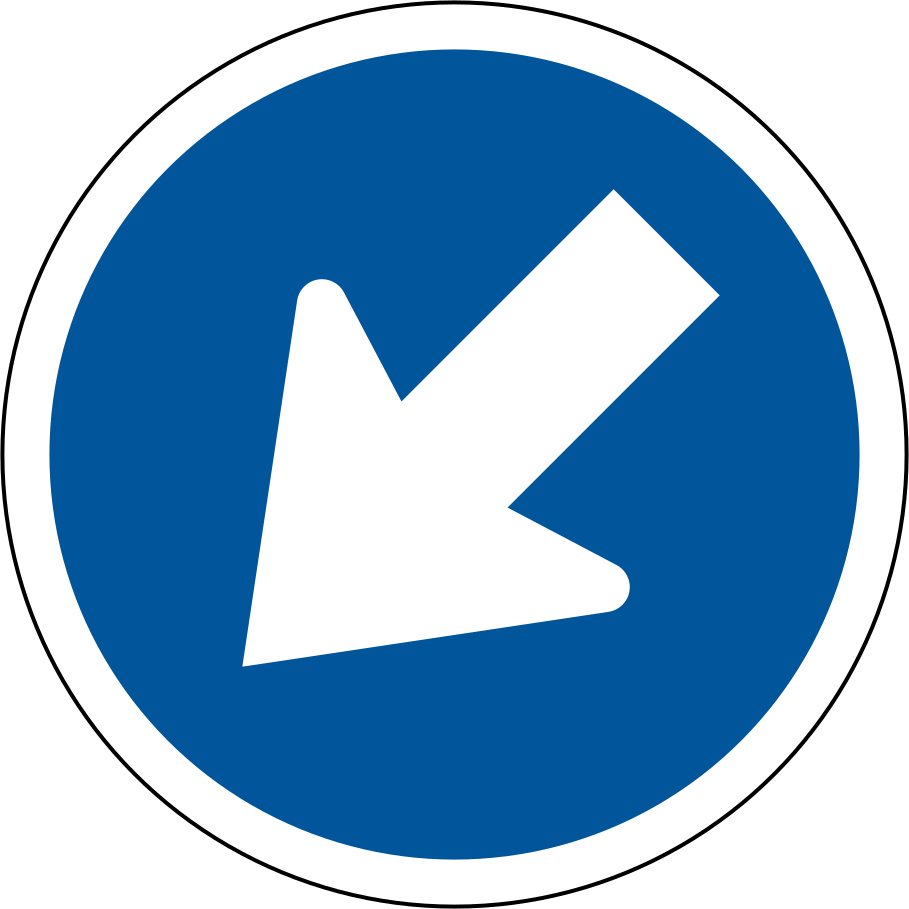
- Only motorcycles may use this route.
- Pass to the left of the obstruction or traffic island.
- Voluntary stopping is prohibited here.
Show the answer
Answer B: Pass to the left of the obstruction or traffic island.
Follow the arrow around the island. This is not a left-turn instruction.
Memory tip: R103 · Keep left
All vehicle codes
4 Which response fits this sign?
- Follow the arrow around the island. This is not a left-turn instruction.
- Use another route if you are driving a different vehicle.
- Do not stop to collect or drop off passengers. Obey traffic controls and emergencies.
Show the answer
Answer A: Follow the arrow around the island. This is not a left-turn instruction.
Keep left: Pass to the left of the obstruction or traffic island.
Memory tip: Follow the arrow around the island. This is not a left-turn instruction.
All vehicle codes
5 Which sign group does this example belong to?
- Prohibition
- Warning
- Command
Show the answer
Answer C: Command
Keep left is a command sign. Pass to the left of the obstruction or traffic island.
Memory tip: Follow the arrow around the island. This is not a left-turn instruction.
All vehicle codes
6 What does this sign mean?
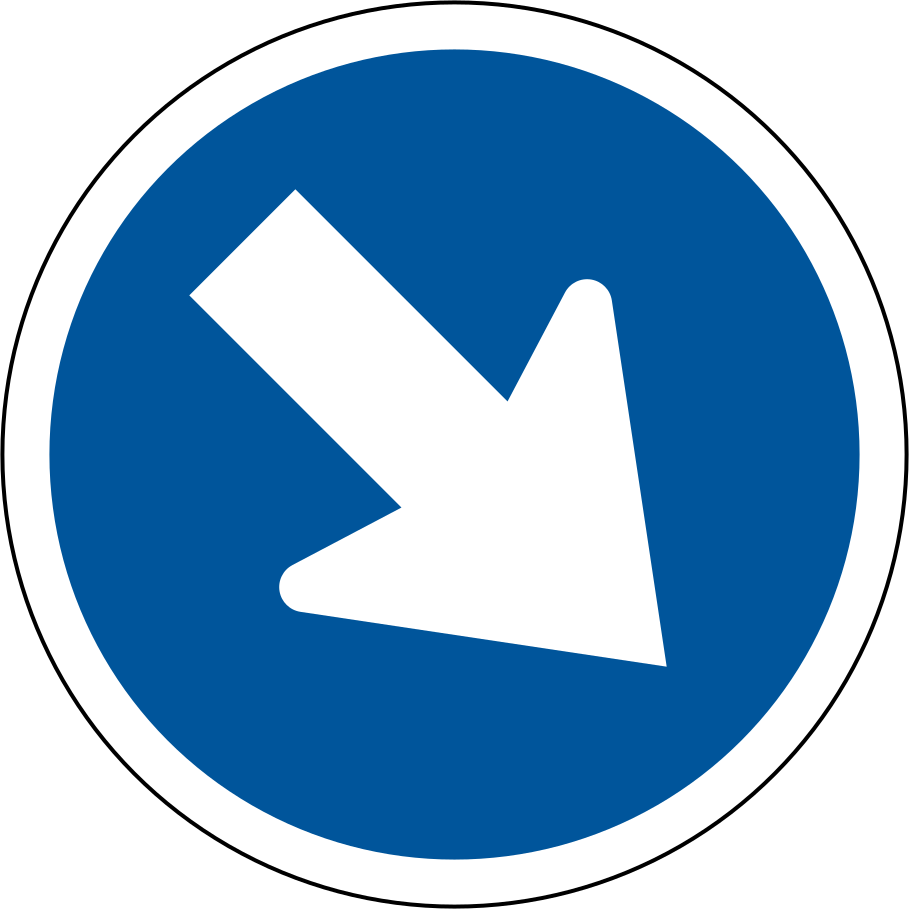
- This route is restricted to motorcars.
- Pedestrians may not use this road.
- Pass to the right of the obstruction or traffic island.
Show the answer
Answer C: Pass to the right of the obstruction or traffic island.
Follow the arrow while observing other traffic.
Memory tip: R104 · Keep right
All vehicle codes
AceK53 is an independent study aid based on public road traffic manuals and is not an official test. Always confirm requirements with your driving licence testing centre.