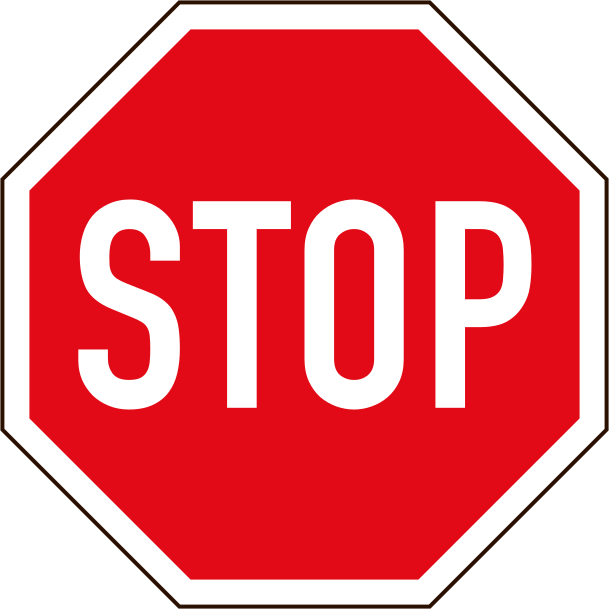
Control sign · R1
Stop sign (R1)
You must come to a complete stop.
What does the stop sign mean?
You must come to a complete stop.
What should you do?
Stop behind the stop line. Look for traffic and pedestrians, then continue when safe.
| Sign code | R1 |
|---|---|
| Sign group | Control signs |
| Applies to | All learner codes (1, 2 and 3) |
| Test section | Road signs and markings |
How to recognise the stop sign
A red octagon with white STOP lettering. No other road sign has eight sides, so it can be recognised even when dirt hides the word or you see its back.
Where you will see it
Junctions, railway crossings and school-patrol crossings. A white stop line is usually painted across your lane in front of it.
What to do when you see it, step by step
- Brake early enough to stop with the whole vehicle behind the stop line.
- With no line, stop with the front of the vehicle level with the sign.
- At a multi-way stop, wait for vehicles that stopped before you to move off.
- Move only once the way is clear.
The common mistake
The stopping position is the line, not the sign post. A slow roll to “see better” is not a stop, and an empty junction does not cancel the requirement.
About control signs
Control signs tell you how to enter, cross or use part of the road, for example by stopping or giving way. They are mostly red and white. The K53 learner's test asks you to recognise signs like the stop sign (R1) and choose the correct response, so learn both the picture and the action.
How to answer a test question about this sign
- Look at the shape and colour first. They tell you the group: control signs for this one.
- Recall what the sign asks of you: stop behind the stop line. Look for traffic and pedestrians, then continue when safe.
- Remove the options that describe a different group of sign, then choose the response that matches the action.
Want the full explanation? Read the chapter Stop and yield signs.
Signs it is often confused with
Learners mix up signs that look or sound similar. Compare the stop sign with these:
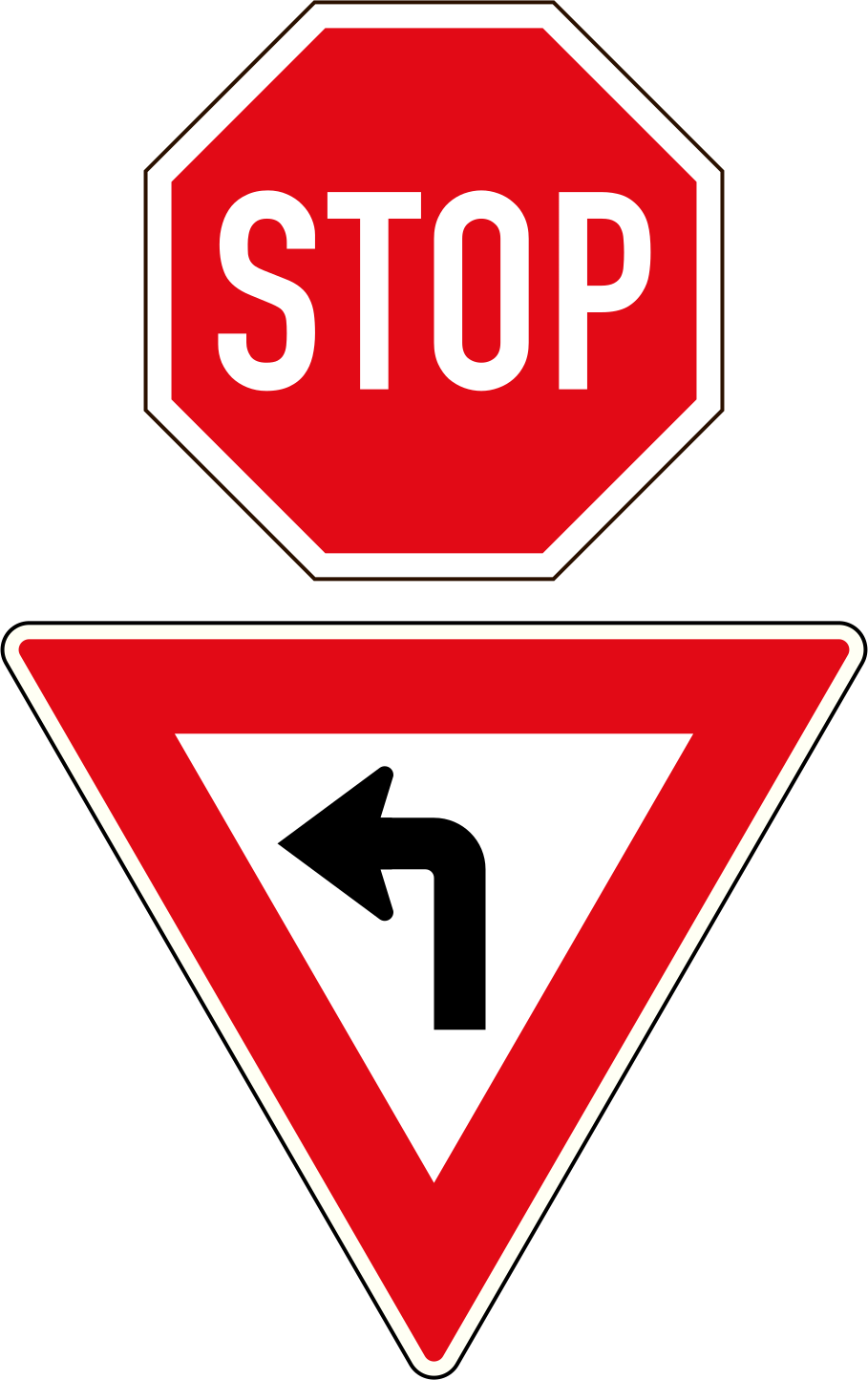 Stop with left-turn yield (R1.2)A STOP sign mounted above a small yield triangle that contains a left-turn arrow.
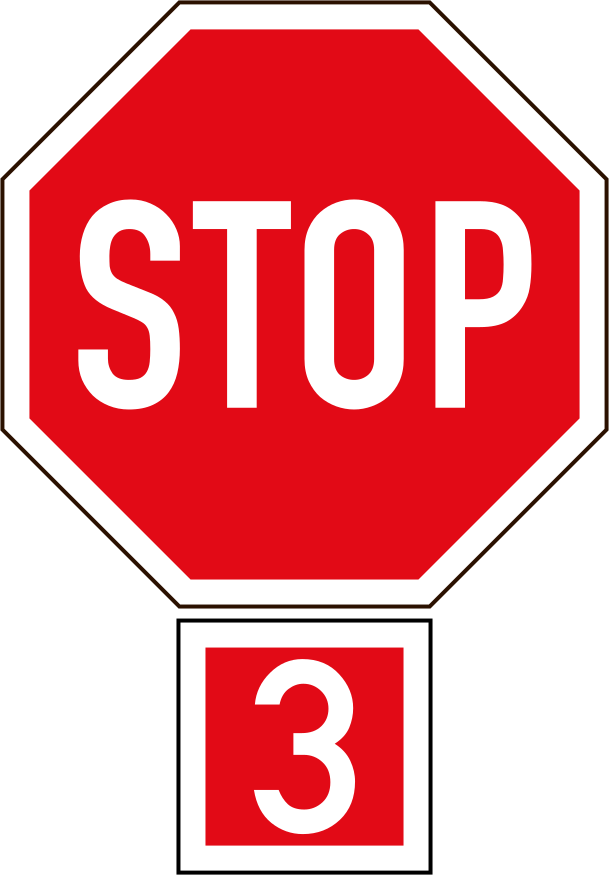 Three-way stop (R1.3)A STOP sign with a small plate showing the number 3 beneath it.
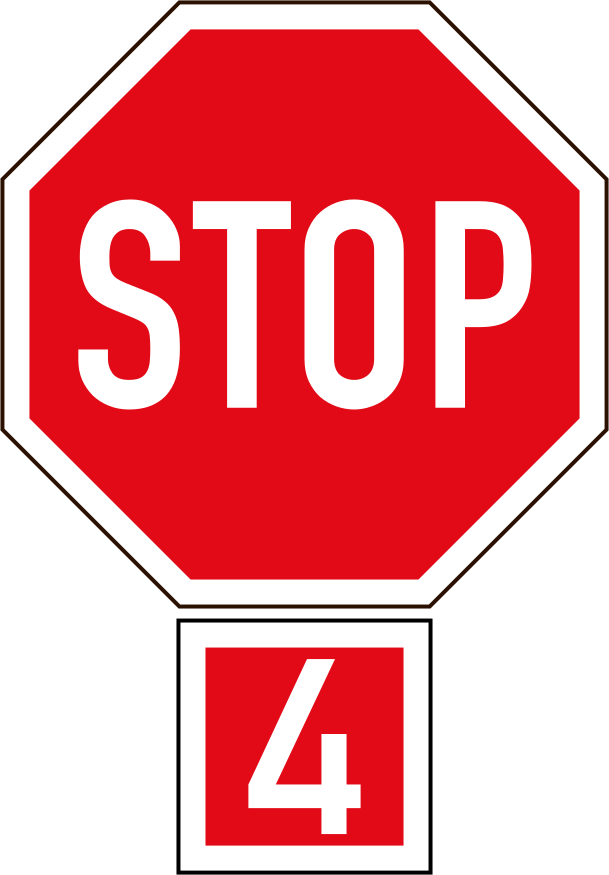 Four-way stop (R1.4)A STOP sign with a small plate showing the number 4 beneath it.
Test yourself: Stop sign questions
1 What does this sign mean?
- You may not exceed 80 km/h.
- Pass to the right of the obstruction or traffic island.
- You must come to a complete stop.
Show the answer
Answer C: You must come to a complete stop.
Stop behind the stop line. Look for traffic and pedestrians, then continue when safe.
Memory tip: R1 · Stop
All vehicle codes
2 Which response fits this sign?
- Stop behind the stop line. Look for traffic and pedestrians, then continue when safe.
- The posted limit is a ceiling, not a target.
- Follow the arrow while observing other traffic.
Show the answer
Answer A: Stop behind the stop line. Look for traffic and pedestrians, then continue when safe.
Stop: You must come to a complete stop.
Memory tip: Stop behind the stop line. Look for traffic and pedestrians, then continue when safe.
All vehicle codes
Stop sign: quick questions
What does the stop sign (R1) mean?
You must come to a complete stop.
What should you do at the stop sign?
Brake early enough to stop with the whole vehicle behind the stop line. With no line, stop with the front of the vehicle level with the sign. At a multi-way stop, wait for vehicles that stopped before you to move off. Move only once the way is clear.
Where will you see the stop sign?
Junctions, railway crossings and school-patrol crossings. A white stop line is usually painted across your lane in front of it.
What is the common mistake with the stop sign?
The stopping position is the line, not the sign post. A slow roll to “see better” is not a stop, and an empty junction does not cancel the requirement.
Sign artwork: Southern African Development Community (SADC), public domain. AceK53 is an independent study aid. Always confirm test requirements with your driving licence testing centre.